Choosing gold or silver jewellery is a colour decision you can make by comparing pieces you enjoy wearing. Skin-tone advice can give you an experiment to try, but it does not create a requirement to wear one colour for the rest of your life. Start with the outfit and the jewellery itself in ordinary daylight.
This guide helps you choose a main metal colour for a purchase or a small everyday selection. It is a different question from combining metals in one outfit. You can decide on a gold-coloured pair of earrings today without having to replace silver pieces you already love.
Compare similar shapes before judging colour
A large polished earring and a tiny textured stud differ in more than metal colour. If one attracts your attention more, scale or finish may be the reason. For a useful comparison, choose two pieces with a similar outline and size.
The River Studs provide a catalogue example in gold and silver options. The listing names 18K gold filled and rhodium plated materials and gives dimensions of 3.7cm by 2.65cm by 0.35cm. Use the current option labels and component details for the finish you select.
Compare the same shape with the same top before deciding which colour you prefer. Do not turn the result into a statement that your colouring is right or wrong. You are choosing what you want to see beside your face.
Try a simple daylight comparison
- Wear a top you reach for regularly and stand in ordinary indirect daylight.
- Try one metal colour at a time, keeping the earring shape or necklace scale as similar as possible.
- Look at the whole outfit, then take a photograph from the same position if it helps.
- Repeat with a second familiar top before making an expensive or extensive change.
A window test is a styling comparison, not a diagnosis of skin undertone. Screens, filters and different lighting can change what you notice in a photograph. Your preference may also change with clothing colour or the amount of jewellery visible.
What about warm and cool undertones?
Many guides associate gold with warmth and silver with a cooler appearance. You can use those descriptions to notice the effect you enjoy. They do not establish that one metal is forbidden for a particular person, and you do not need a vein-colour test before buying earrings.
A David Jones jewellery colour guide also treats common undertone advice as flexible. The more useful purchase evidence is the piece in your own wardrobe. A metal colour can blend in, stand out or repeat another accessory, depending on how you wear it.
Colour and composition are separate
Silver-coloured jewellery may be sterling silver, stainless steel, rhodium plated or another construction. Gold-coloured jewellery may be solid gold, gold-filled, plated or something else. Choosing the appearance you like does not finish the materials decision.
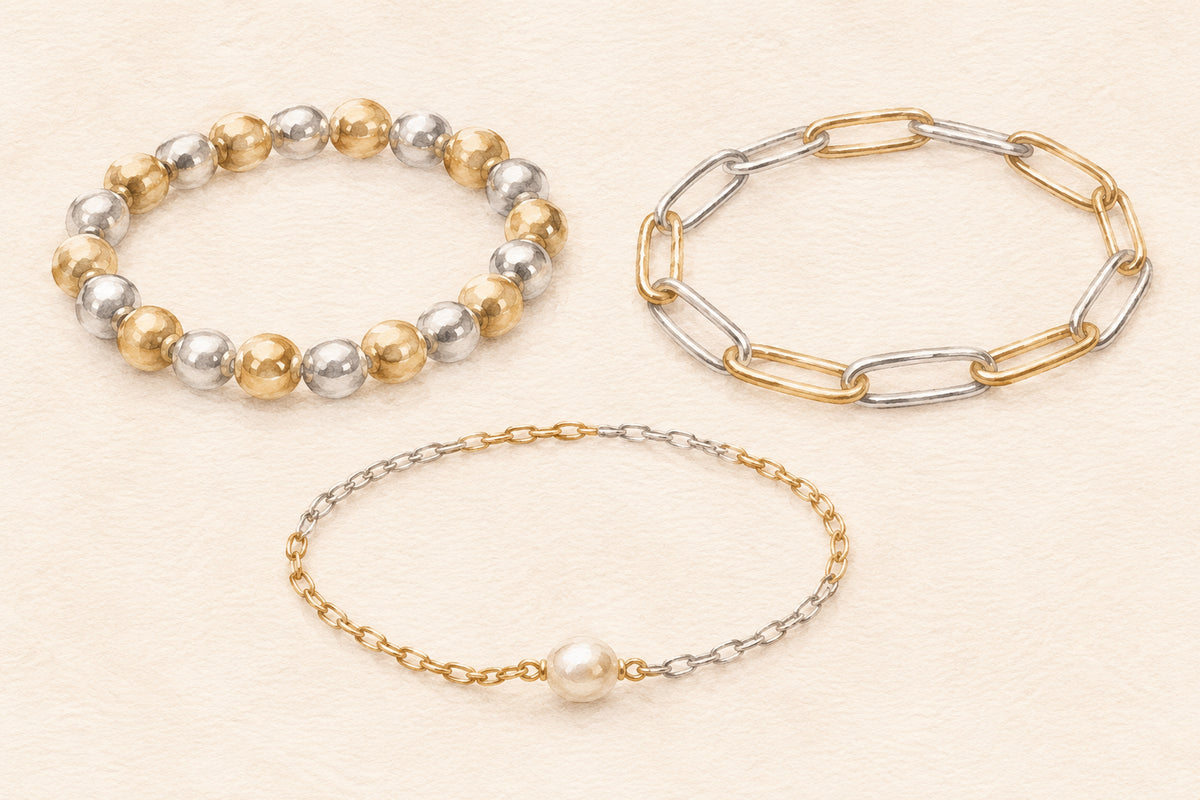
The Willow Paperclip Chain Bracelet is listed in sterling silver and 14K gold-filled versions, with a 5.5-inch length and 2-inch extender. Here you can compare similar chain shapes while also reading two distinct material descriptions.
If you have a known reaction to a component, ask about the full construction. A gold or silver colour does not establish skin suitability. Likewise, matching the colour of two pieces does not mean their care instructions will match.
Use a small bracelet comparison if earrings feel too noticeable
You may find it easier to judge a colour on your wrist before choosing jewellery near your face. The Delia Bracelet combines 4mm opalite beads with 3mm 14K gold-filled or sterling silver beads and stretch elastic.
The pale opalite detail gives the two metal options a common visual reference. Check your exact size and available finish before ordering. The point is to compare the effect of the metal, rather than change colour, bead size and overall design all at once.
Notice what you already repeat
Look at your usual watch, bag hardware, rings and favourite earrings. Repeated choices can tell you more about your taste than a prescribed colour category. A colour you enjoy wearing often may be a practical starting point for the next purchase.
That does not mean every zip or buckle must match. Decide which items are visible together and which you care about coordinating. A permanent or sentimental ring can stay part of your outfit while you choose a different colour elsewhere.
Buying for someone else
Notice what the recipient actually wears over several occasions. Their everyday earrings or watch may be a stronger clue than the colour of one party outfit. Missoma's gift guide also suggests observing the person's existing jewellery when choosing a metal colour.
If you can ask, ask which finish they prefer in the particular design. Gold or silver is sometimes only one part of the choice: the recipient may care more about a clasp, pearl detail or scale. Check current store terms before making a surprise purchase that depends on an exchange.
Choose one useful addition
Pick a piece that works with at least one outfit you already wear and has specifications you understand. Use the current product page to check dimensions, finish availability and care. You can build a small selection gradually instead of deciding on a complete jewellery identity at once.
If you later want to combine colours, begin by trying two pieces you already own with the same outfit. To compare current designs, browse earrings or explore bracelets and choose the colour you want to wear.